
Default strategy
By default, the gateway looks for the API key in theApi-Key request header.
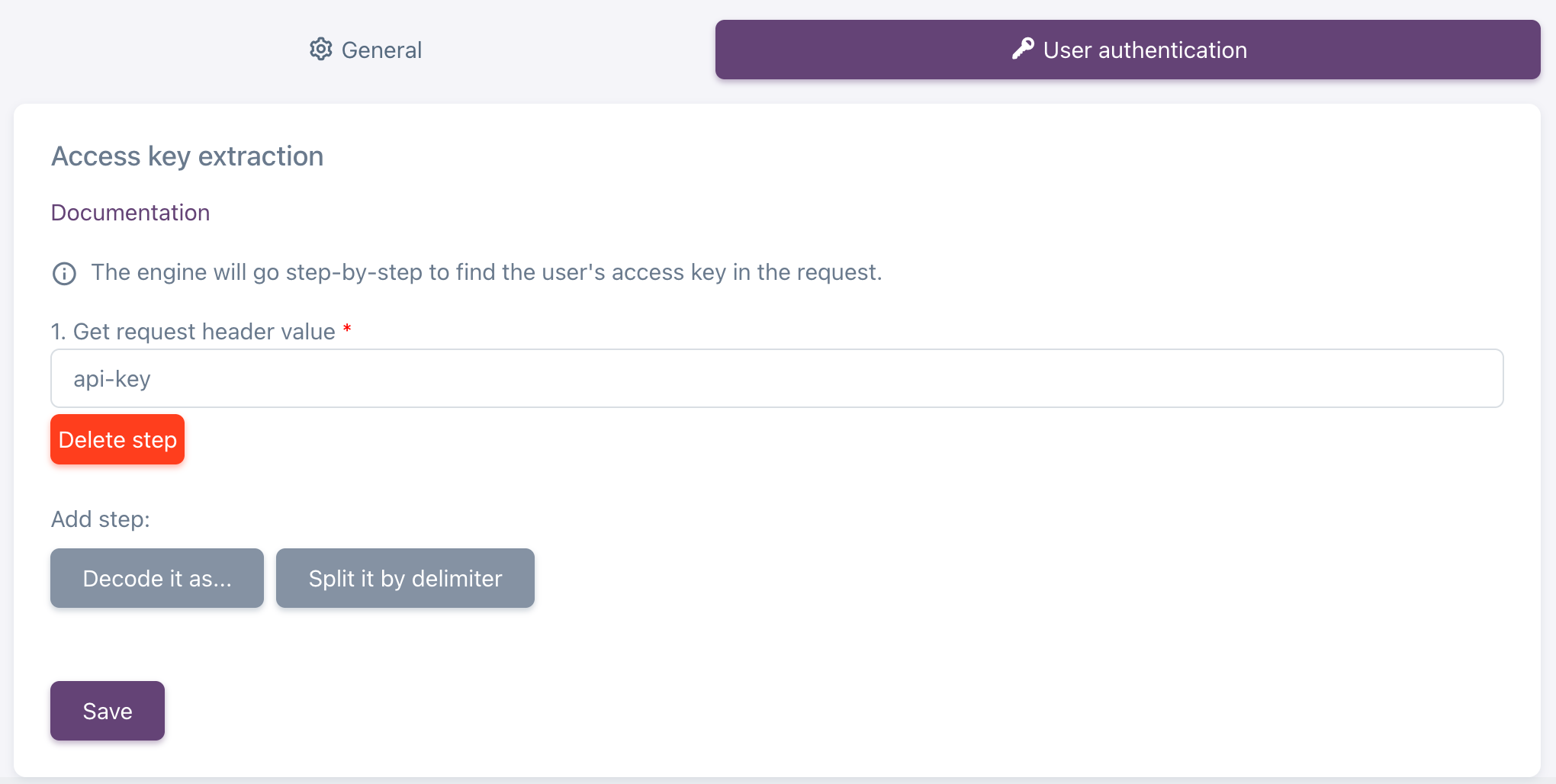
API key in an arbitrary header
If you’d like to use a custom header for the access token (e.g.X-My-Api-Token: <token>), configure the token extraction strategy as follows:
- Click Delete step in order to clear the step list.
-
Enter
X-My-Api-Tokenas header name. - Click Save.
X-My-Api-Token: <token> header.
API key in “Authorization: Bearer” header
If you’d like to useAuthorization: Bearer <token> scheme, configure the token extraction strategy as follows:
- Click Delete step in order to clear the step list.
- Click Get request header value.
-
Enter
Authorizationas header name. - Click Split it by delimiter.
-
Enter “
- Click Take value by path or apply expression.
-
Enter
input[1]as expression.
In the expression you can use the result of the previous step, it’s stored in a variable named
input.- Click Save.
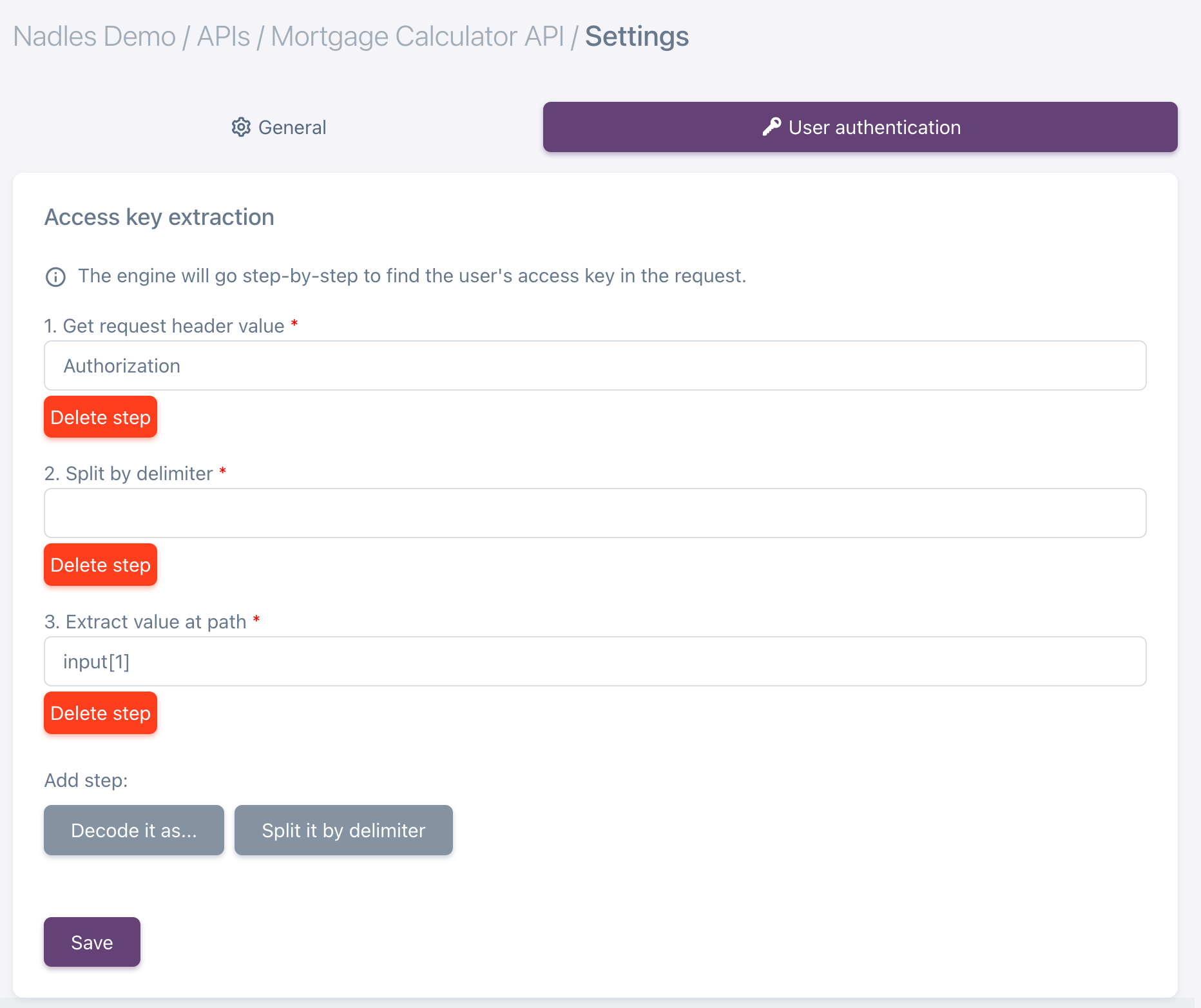
Authorization: Bearer <token> header.
API key in JSON body
Let’s say the request body is a JSON object containing access token:- Click Delete step in order to clear the step list.
- Click Get request body.
- Click Decode it as….
-
Choose
JSONfrom the dropdown list. - Click Take value by path or apply expression.
-
Enter
input.auth.tokenas expression. - Click Save.
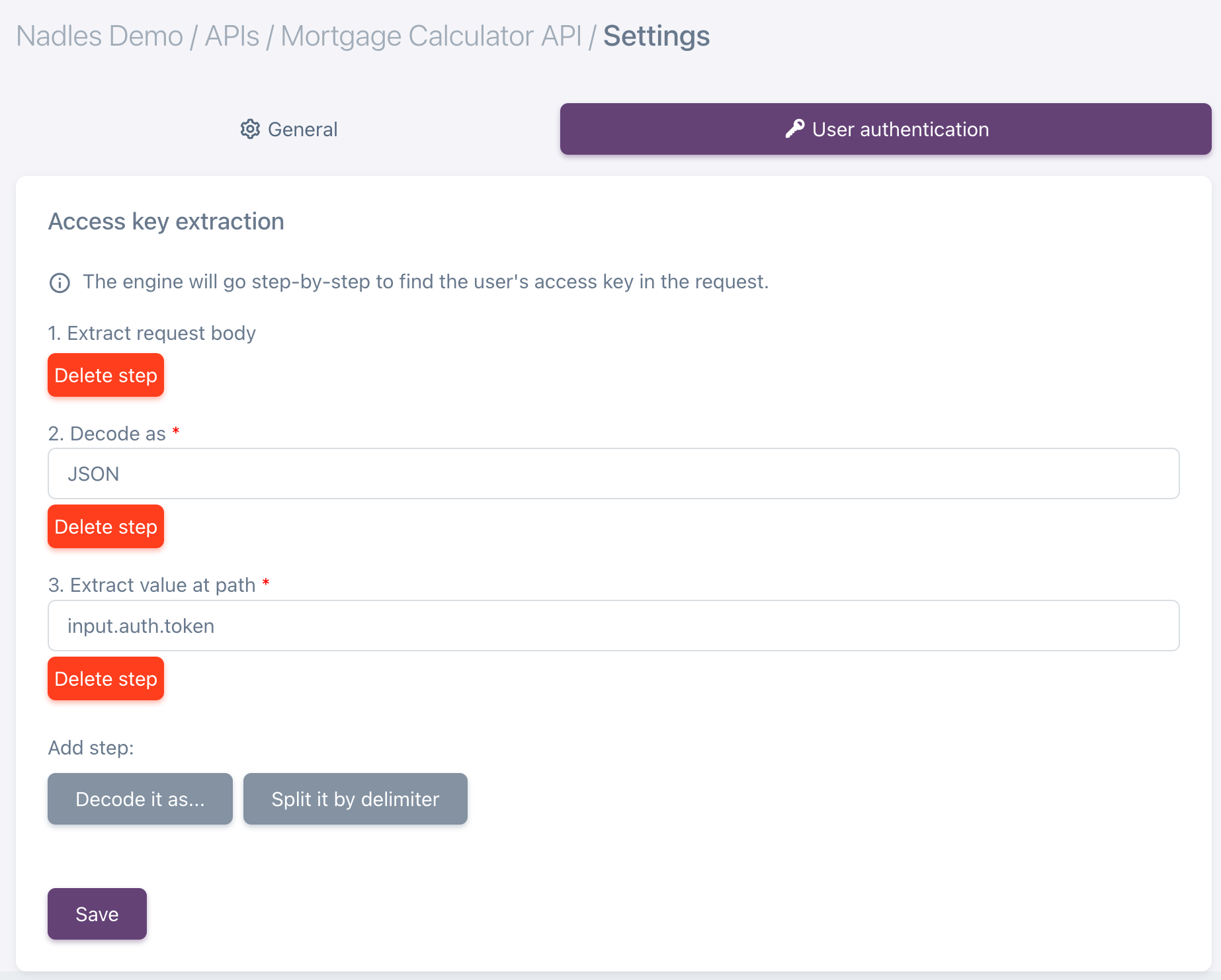
API key in query string
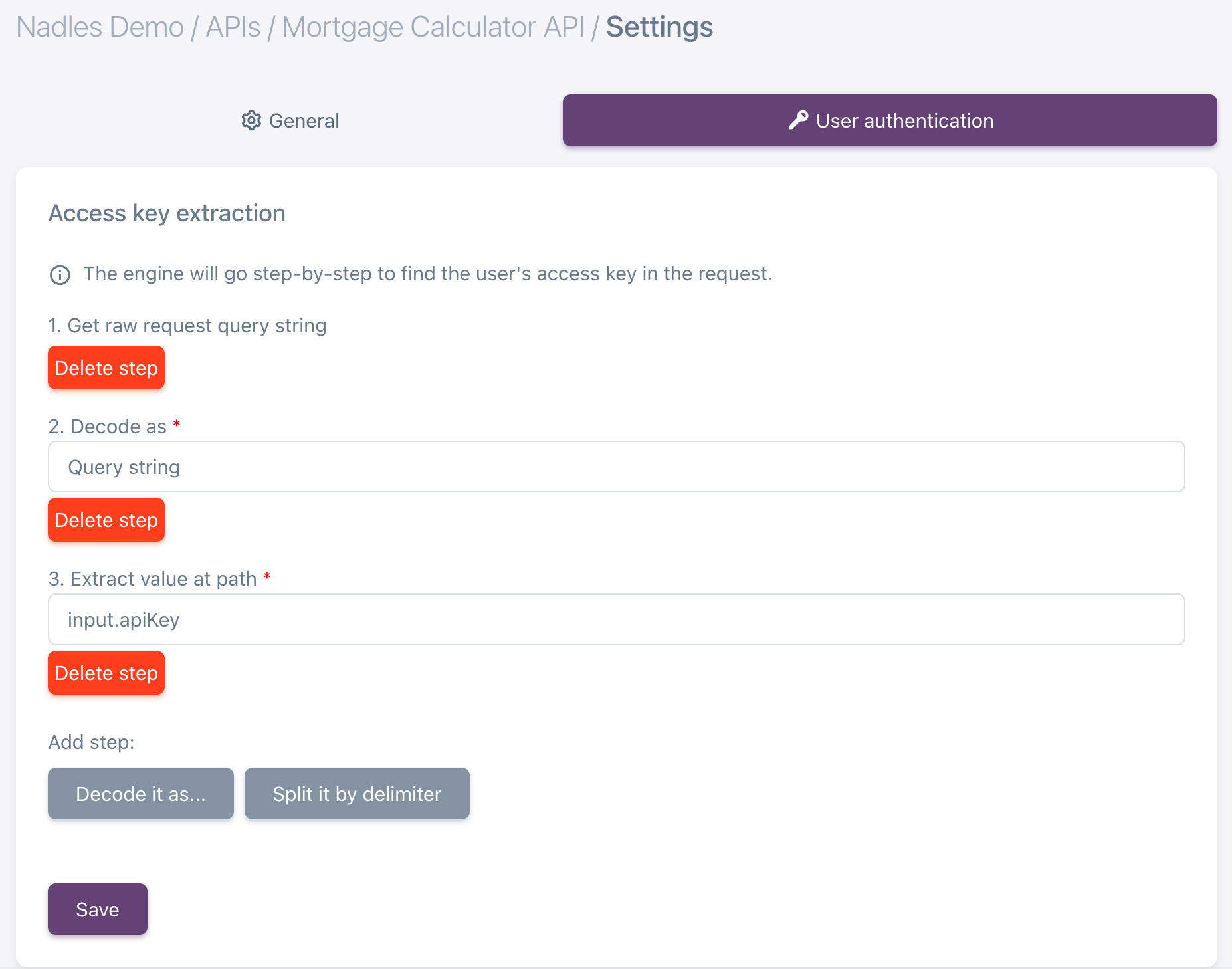
In some scenarios it’s more convenient to pass API keys in a query string parameter. For example, you would like to pass API keys inapiKey query string parameters like /orders/154?apiKey=MmU2YzQ4ODktNzFjMi00OWM1LTlhNTgtZDJhZjZmN2M1ODY1
- Click Delete step in order to clear the step list.
- Click Get raw query string.
-
Choose
Query stringfrom the dropdown list. - Click Take value by path or apply expression.
-
Enter
input.apiKeyas expression.
In the expression you can use the result of the previous step, it’s stored in a variable named
input.apiKey query string parameter.